 Other
Other
Will There Be a Clear Winner or Just Global Consequences?
Based on 2026 assessments, a U.S.-Israel coalition would likely dominate militarily, dismantling Iranian infrastructure,

The question dominating global headlines right now is simple—but the answer is anything but: who will win the Iran war?
As the 2026 conflict involving Iran, the United States, and Israel unfolds, early expectations of a quick victory have given way to a far more complicated reality. Modern warfare, especially in the Middle East, rarely produces clear winners. Instead, it creates shifting power balances, long-term instability, and unexpected consequences.
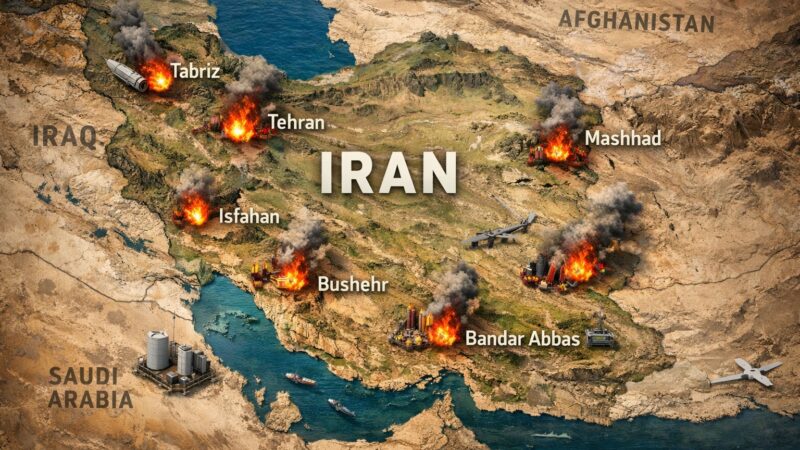
The war began with large-scale U.S. and Israeli strikes targeting Iran’s military infrastructure and leadership. In the opening phase, hundreds of coordinated attacks hit missile systems, air defenses, and key command centers.
Iran responded with massive retaliation—launching missiles and drones across the region, targeting military bases, oil infrastructure, and shipping routes.
What was expected to be a short, decisive campaign has instead turned into a prolonged and dangerous regional conflict.
On paper, the United States and Israel hold overwhelming military superiority:
Past clashes have shown that Israel can significantly damage Iran’s military infrastructure quickly.
However, war is not fought on paper alone.
Iran has built its strategy around asymmetric warfare, including:
This means that even if Iran cannot “win” conventionally, it can prevent its enemies from achieving a decisive victory.
One of Iran’s strongest advantages lies outside traditional combat.
By threatening global oil routes—especially the Strait of Hormuz, through which about 20% of the world’s oil flows—Iran can disrupt the global economy.
Recent analysis suggests that this strategy is already working:
In fact, some analysts warn that the war may leave Iran more influential regionally, even after heavy military losses.
A key goal for the U.S. and Israel has been weakening—or even replacing—Iran’s leadership.
Yet, despite major strikes and leadership losses, Iran’s government remains intact and, in some ways, more unified.
This highlights a critical truth:
In modern conflicts, survival itself can be a form of victory.
For Iran:
For the U.S. and Israel:
Another factor shaping the outcome is public support—especially in the United States.
Recent polling shows:
Without public backing, sustaining a long war becomes politically difficult, reducing the chances of a decisive outcome.
The most honest answer is:
Probably no one.
Instead, the likely outcomes include:
Neither side achieves its core objectives, and the conflict drags on.
Both sides declare partial victory and agree to a ceasefire.
Even after damage, Iran emerges more influential by:
They may:
—but still fail to reshape Iran politically.
The Iran war is a reminder that modern conflicts are not about clear winners and losers.
Military strength matters—but so do resilience, economics, public opinion, and geopolitical complexity.
In this case:
Other
Based on 2026 assessments, a U.S.-Israel coalition would likely dominate militarily, dismantling Iranian infrastructure,
Submit a guest post — it’s free.
Join & Submit Your Post →