 Other
Other
Will There Be a Clear Winner or Just Global Consequences?
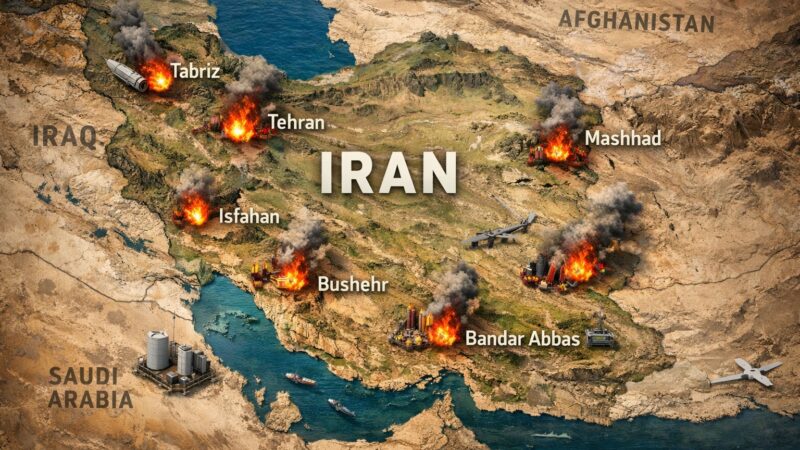
Based on 2026 assessments, a U.S.-Israel coalition would likely dominate militarily, dismantling Iranian infrastructure,

The question “who will win the Iran war?” sounds simple—but in reality, it’s one of the hardest geopolitical questions to answer right now. Wars today aren’t just decided by who has the strongest military; they’re shaped by economics, politics, public opinion, and endurance. And in the current 2026 conflict involving Iran, the United States, Israel, and regional actors, the answer is far from clear.
As of now, most analysts agree on one thing: there is no decisive winner.
Early reports suggest that U.S. and Israeli forces have achieved significant tactical success—damaging Iran’s missile systems and military infrastructure. (csmonitor.com)
But war isn’t only about battlefield victories. It’s about whether those victories translate into long-term political goals.
At the same time, Iran has demonstrated its own form of power—especially by disrupting global oil flows through the Strait of Hormuz, a critical chokepoint for the world economy. (Reuters)
That single move has sent shockwaves across global markets and raised energy prices worldwide. (The Washington Post)
So while one side may be winning militarily in certain areas, the other is winning economically and strategically.
A key reason this war is so hard to “score” is that each side defines victory differently:
United States & allies:
Want to weaken Iran’s military, stop nuclear development, and maintain regional stability.
Iran:
Aims to survive, maintain influence, and raise the cost of war so high that opponents are forced to negotiate.
This creates a classic war of attrition—where the goal isn’t quick victory, but endurance. (alookzone.com)
In such wars, the winner is often the side that can last longer politically and economically, not just militarily.
Interestingly, some analysts argue that other countries may benefit more than either side fighting.
Rising oil prices and instability can benefit energy exporters.
Rivals like China or Russia may gain influence as the U.S. becomes tied down.
Global supply chains are shifting, creating new economic opportunities elsewhere.
In that sense, the biggest “winners” might not even be on the battlefield. (Centre for European Reform)
One of the clearest outcomes so far is that the global economy is taking a hit.
Oil prices have surged past $100 per barrel
Shipping, food, and fuel costs are rising worldwide
Shortages and inflation risks are increasing
Even countries not directly involved in the conflict are feeling the consequences. In modern warfare, economic damage spreads globally—and quickly.
Looking ahead, there are a few realistic ways this war could end:
Both sides claim partial victory and agree to a deal.
This is common in modern conflicts where total victory is too costly.
The war drags on for months or years, with no clear outcome.
This is increasingly likely given current dynamics.
One side completely collapses the other’s military and political system.
Experts consider this unlikely due to geography, alliances, and costs. (Foreign Policy Research Institute)
The honest answer: probably no one—at least not in the traditional sense.
The U.S. and its allies may win military battles
Iran may win strategic leverage and endurance
Other global powers may win geopolitically
And ordinary people—especially in the region—lose the most
Modern wars rarely end with clear winners. Instead, they end when the cost of continuing becomes unbearable.
If history is any guide, the real question isn’t “who will win?” but:
“Who can afford to keep fighting the longest—and at what cost?”
That’s the question that will ultimately decide the outcome of the Iran war.
Other
Based on 2026 assessments, a U.S.-Israel coalition would likely dominate militarily, dismantling Iranian infrastructure,
 SEO & Marketing
who is winning the Iran war right now Iran vs US military comparison 2026 will Iran defeat Israel or USA Iran war global impact oil…
Submit a guest post — it’s free.
Join & Submit Your Post →